By Geralyn Magan
Emily Franzosa has dedicated her career to helping families access home care and to supporting the aides who deliver it.
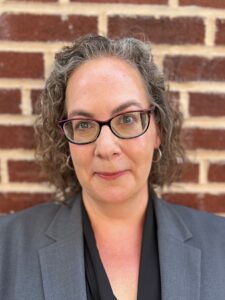 There aren’t many people who can say they launched their home care research career from the stage of a New York City theater. Emily Franzosa is one of them.
Franzosa is a research health science specialist at the J.J. Peters VA Medical Center in Bronx, NY, and an assistant professor at the Icahn School of Medicine at Mount Sinai. She is also part of the first cohort of a Fellows Program established in 2025 by the LeadingAge LTSS Center @UMass Boston.
The LTSS Center Fellows Program recognizes individuals who work closely with the center in unpaid advisory roles. Its mission is to help the LTSS Center expand collaborative opportunities for research, publications, projects, funding, and influence.
From Theater to Home Care Research
Franzosa majored in theater during her undergraduate years at Ithaca College in upstate New York. As luck would have it, her first job after graduation led her to the Working Theater, a New York City-based company dedicated to creating and producing plays “for, about, and with working-class people.”
“We did a lot of work with unions there, and that’s how I ended up with a union job,” says Franzosa, who left the Working Theater in 2003 to spend 16 years at the 1199SEIU Benefit and Pension Funds, which manage benefits for unionized home care aides in New York City.
“I was so drawn to the work that all of the home care workers were doing, and the tremendous amount of passion that they put into their job for very little pay, not a lot of benefit, and not a lot of professional recognition,” she recalls.
Franzosa’s interest in research grew as she encountered troubling systemic and structural issues that affected how 1199SEIU’s home care aides performed their work. That’s when she decided to pursue a doctoral degree in public health and conduct research to strengthen the home care sector.
Her current research at the VA has a dual purpose. First, she’s working to help veterans access home care services and keep trusted aides in their homes for as long as they’re needed. Second, she’s researching strategies to ensure that home care aides feel supported and recognized for the important work they do.
Building Special Relationships
Franzosa understands the often-overwhelming challenges families face when seeking care for loved ones who want to stay at home.
“For many years, my grandmother had an amazing, wonderful home care worker named Rose, and keeping them together was a full-time job for many people in my family,” she says. “Navigating the system was very difficult, even for someone like me who worked in the field.”
Witnessing the relationship between Rose and her grandmother convinced Franzosa that her family’s perseverance had paid off—and that home care relationships deserved further study. In 2018, she and two colleagues published research highlighting the importance of the life-changing relationships that often develop between home care aides and care recipients.
The article, published in The Gerontologist, examined the “emotional labor” that home care aides perform as they build close, trusting relationships with clients and family members.
“It’s important to families and clients to have somebody that they can trust and know and like, but it’s also really important to aides,” says Franzosa. “When we interviewed aides, they talked about their caregiving tasks first. But they also said their jobs were about the relationship—providing emotional support and really being there for the client.”
These relationships are central to the emotional well-being of both clients and aides, says Franzosa. They can also be emotionally taxing for aides, who expressed a need for more support in managing emotion-related job stress.
Bridging Policy and Practice
From 2022 to 2024, Franzosa served as a health and aging policy fellow on the U.S. Senate Special Committee on Aging’s disability policy team. The experience shaped how she now approaches and works in policy.
“As a researcher, I can recommend strategies and solutions, but if the policy piece isn’t there, nothing’s going to happen,” she says. “It was so helpful to learn which policies move forward and which don’t, what can move the needle, and how to work with a broad coalition that doesn’t always reach consensus. I have been able to bring those lessons to my work and think more practically about which policy levers might be most effective.”
Taking Small Steps Toward Large Changes
Franzosa’s long-term dream is to “fund home care services more broadly and make sure workers get paid what they’re worth.” In the short term, she’s also seeking ways to “do more with less and maximize what we have.”
To reach that goal, Franzosa is focused on taking incremental steps toward making significant changes in the home care field. She’d like to see aides receive more supportive supervision, be better integrated into care teams and trained to take on advanced roles, and receive timely answers to care-related questions while on the job. Finally, Franzosa underscores the pressing need to ensure that eligible older adults who want to remain at home have access to the services they need and want.
Franzosa is also intent on learning from aides, employers, and clients who have adopted successful strategies, sometimes through trial and error, to address caregiving challenges in the home.
“At the VA, we are co-designing training with aides and agencies and veterans, so everyone involved in those services gets a voice, and we make sure we’re really capturing what’s most useful and effective,” she says.
Franzosa looks forward to collaborating with LeadingAge researchers and providers in the same way.
“The LTSS Center represents a group of people whose work I truly respect,” she says. “I’m looking forward to discovering how our work intersects to strengthen long-term care. I’m also excited to see how the research I’m doing can support the work LeadingAge members are doing to improve care quality and manage the workforce.”