
Who are “Able-Bodied” Non-Working Medicaid Beneficiaries?
Jane Tavares, PhD, adjunct instructor, University of Massachusetts Boston
Marc A. Cohen, PhD, co-director of the LeadingAge LTSS Center at UMass Boston
About:
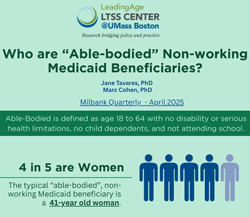
These infographics visually represent the individuals who will be affected by the proposed Medicaid and SNAP work requirements. Under the proposed legislation, individuals aged 18 to 64 who are deemed “able-bodied” would be required to work to be eligible for the program. Yet, little factual information is known about who these individuals actually are and how they may be affected by potential changes to public benefits. The proposed cuts to the Medicaid program are estimated to result in nearly 14 million Americans being uninsured.
Our Approach:
The LTSS Center analyzed the 2023 American Community Survey of the U.S. Census to identify Medicaid beneficiaries who would be considered “able-bodied” under the proposed legislation. This includes individuals aged 18 to 64 who are not currently employed, have no disabilities or serious health limitations, have no child dependents, and are not currently enrolled in school.
Key Takeaways:
Our research revealed that those who are considered “able-bodied” are predominantly middle-aged-to-older women who are exceptionally impoverished, have low levels of education, and left the workforce to care for their families. The data show that many “able-bodied” individuals are age 50 and older, an age group that typically has the greatest need for services and supports through programs like Medicaid. In addition to risking Medicaid coverage loss, many could also lose access to SNAP benefits, compounding financial hardship for already vulnerable households. For able-bodied Medicaid beneficiaries who receive SNAP, these food benefits often account for nearly 30% of their total household income, highlighting how deeply these individuals rely on public programs to meet basic needs.
How to Use this Resource:
These infographics provide aging and disability advocates, policymakers, and the public with fact-based information about who will be impacted by cuts to the Medicaid and SNAP programs.
Who are “Able-Bodied” Non-Working Medicaid Beneficiaries?
Able-Bodied Medicaid Beneficiaries: How many might be impacted by SNAP Cuts?
