
By Robyn Stone
Before she retired from LeadingAge, Robyn Stone reviewed the most important issues she’s addressed across 62 blog posts spanning 12 years.
Retirements often prompt lengthy lookbacks at the high points of your career: the degrees you’ve earned, the titles you’ve held, the research you’ve conducted, the journal articles you’ve written, and the awards you’ve received. Gathered in announcements and farewell speeches, these “data points” summarize decades of work that unfolded one day at a time and passed more quickly than you ever imagined.
I have earned my fair share of data points since I first entered the aging field 50 years ago. But to be honest, the facts and figures on my resume tell only part of my story.
The 62 blogs I’ve written over the past 12 years have helped fill those gaps.
I’ve treasured the opportunity to speak directly to members six times a year through the LeadingAge LTSS Center @UMass Boston newsletter. These messages have helped me crystallize my thinking about the issues I care about most. As such, they represent the best farewell I could offer to the friends and colleagues who have shared these years with me.
Here are four issues that stand out.
Behavioral Health
I wrote my first blog in July 2012 after serving for a year on the Committee on the Mental Health Workforce for Geriatric Populations at the National Academies of Sciences, Engineering, and Medicine. Our final report highlighted the startlingly high prevalence of mental health and substance use (MH/SU) conditions among older adults and the critical shortage of trained workers to care for them.
I called on LeadingAge members to take the committee’s findings and recommendations to heart by conducting MH/SU screenings and assessments of residents and clients, providing staff with adequate MH/SU training, and integrating MH/SU issues into an overall person-centered care delivery system. I repeated that request in December 2025.
Workforce
The workforce challenges that plague our field have been at the forefront of my mind—and my research agenda—for as long as I can remember. These issues were often the subject of my blog posts.
In September 2019, I outlined 12 definitive actions we could take on the policy, educational, and workplace fronts to strengthen the long-term services and supports (LTSS) workforce. The first action—tie Medicare/Medicaid reimbursement directly to workforce development—will not surprise you. Other recommendations included expanding apprenticeship programs (a goal we are still pursuing), exploring nurse delegation, and redesigning jobs to accommodate older workers. All 12 ideas are worth revisiting.
In 2020, I argued that everyone wins when direct care professionals earn at least a living wage. A year later, I outlined six strategies to professionalize the direct care workforce and ensure a stable, high-quality workforce will be available to care for older adults with LTSS needs well into the future.
Home Care
In 2018, I invoked the name of Lester Holt, then the anchor of NBC Nightly News, to underscore consumers’ preference for receiving care and services at home. Lester had used his prime-time news platform to share research showing that patients receiving care at home for serious conditions achieved outcomes comparable to those of similar patients treated in the hospital, at a lower cost.
This study resonated with Lester because he knew home care would resonate with his viewers. But my blog argued that any successful healthcare-at-home model must be built around a coordinated home care team—and that those teams must treat home care aides as respected colleagues, train them, and welcome their collaboration with community-based doctors, nurses, social workers, and pharmacists.
Affordable Housing
In 2021, I let my imagination run wild to describe “My Perfect World,” where housing options would abound and the integration of housing and health would be commonplace. In that world, every American would have access to a variety of affordable housing options within a single geographic area, and it would be easy to transition between them as life circumstances and functional abilities changed. We’d eliminate the stigma around renting and no longer view homeownership as the only path to the American Dream. Most importantly, we’d view all housing options as potential platforms for delivering the services and supports that help residents remain healthy and live independently.
Parting Words
These are only a fraction of the topics I’ve had the privilege of exploring on this platform. You can find many more blogs on the LTSS Center website. In particular, be sure to explore my thoughts on applied research, dementia care, public health, and global aging.
In addition, as I retire from LeadingAge and from this blog, I want to leave you with some parting advice I borrowed from comedian Amy Poehler for a 2022 blog post.
“You can’t do it alone,” the star of Parks and Recreation said in her 2011 Class Day speech at Harvard. “As you navigate through the rest of your life, be open to collaboration. Other people’s ideas are often better than your own. Find a group of people who challenge and inspire you. Spend a lot of time with them, and it will change your life.”
I couldn’t have said it better myself.
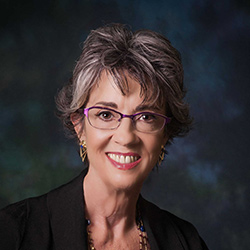
Robyn I. Stone, DrPH, is senior vice president of research at LeadingAge, and co-director of the LeadingAge LTSS Center @UMass Boston. Her widely published work addresses long-term care policy and quality, chronic care for people with disabilities, the aging services workforce, affordable senior housing, and family caregiving.