By Geralyn Magan
Nzinga “Zing” Shaw helps organizations align people, culture, and strategy so both the organization and the people within it can thrive.
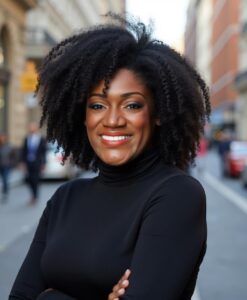 Nzinga “Zing” Shaw doesn’t hesitate when asked to articulate the central theme of her work, which helps organizations develop strategies to improve their effectiveness.
“People are the strategy,” she says. “Organizations that understand this are better positioned to attract talent, navigate change, build trust, innovate, and ultimately deliver on their mission. My work often begins by listening deeply to people across an organization to understand not only what is happening but also why. From there, I help leaders translate those insights into practical strategies that strengthen organizational effectiveness.”
Shaw carries out much of this work as CEO of Attack the Glass LLC, which she founded in 2019 to help organizations build healthy workforce cultures. She supports LeadingAge members by facilitating leadership development initiatives, including the Leaders of Color Network Mentorship Program.
Shaw is also part of the inaugural cohort of a Fellows Program established in 2025 to recognize researchers and program experts who work closely with the Washington, DC, office of the LeadingAge LTSS Center @UMass Boston.
Here are excerpts from the LTSS Center’s recent interview with Shaw.
What inspired you to build a career around human capital and organizational culture?
Early in my career, I became fascinated by the difference between organizations that merely employ people and those that truly unlock their potential.
Over time, I saw extraordinarily talented people succeed or struggle, not only because of their individual capabilities but also because of the cultures and leaders around them. I began asking deeper questions: What causes people to feel connected to an organization’s mission? Why do some leaders create environments where people flourish, while others unintentionally diminish talent? How can two organizations with similar resources produce dramatically different employee experiences and outcomes? Those questions became the foundation of my career.
Why should organizations invest in people and culture?
Behind every organizational chart are people. Behind every workforce strategy are families, careers, aspirations, and livelihoods. Behind every organizational mission are employees who ultimately determine whether that mission becomes real.
Culture shows up every day in decisions, behaviors, relationships, systems, opportunities, and people’s experience of leadership. When organizations intentionally invest in people and culture, that investment influences innovation, reputation, customer experience, organizational resilience, and performance.
Why is workforce culture so important in aging services organizations?
Aging services is profoundly human work. Organizations in this sector enter people’s lives at some of their most important and vulnerable moments. The quality of that experience is inseparable from the people who provide the care and services.
That makes workforce culture especially consequential. When caregivers and employees feel supported, respected, prepared, and connected to purpose, the people and families they serve notice the difference. There is a clear link between how an organization cares for its workforce and how that workforce can care for others.
Why is mentorship so important?
One of the most meaningful forms of impact is developing leaders who develop other people. That’s why I am so proud of the relationships I’ve built with leaders across the aging services sector and of the opportunity to contribute to their development, particularly through the Leaders of Color Network Mentorship Program. When someone I’ve worked with begins leading differently, advocating more effectively for their workforce, mentoring another leader, or creating a healthier culture within their organization, that impact continues long after our formal work together ends.
What role do leaders play in creating a healthy organizational culture?
I hope more leaders will recognize that the organization’s culture is their responsibility. Every decision a leader makes signals what an organization values: who is heard, who is developed, which behaviors are rewarded, how accountability is enforced, and whether people experience dignity and belonging at work. I want current and future leaders to be more intentional about those choices. Building healthy cultures in aging services isn’t merely a workforce initiative. It is a strategic imperative.
What emerging trend will have the greatest impact on aging services organizations?
Employees increasingly expect an employer to demonstrate—not merely talk about—why their work matters, how they will grow, whether leadership can be trusted, and whether the employment relationship is mutually beneficial. Technology will transform how work gets done, but the organizations that thrive will be those that become more human as they become more technologically sophisticated.
How can organizations prepare for tomorrow’s workforce and leadership challenges?
Start by abandoning the assumption that yesterday’s workforce model will solve tomorrow’s workforce challenges. Organizations should begin now to examine their talent pipelines, succession plans, leadership capabilities, job structures, technology, employee experience, and workforce demographics. They should also invest much earlier in leadership development, and that investment should continue throughout someone’s career.
In addition, organizations must become better listeners. Workforce strategy shouldn’t be designed solely in executive conference rooms. Employees often know where processes are broken, where talent is being lost, and where the organization is creating unnecessary friction. Leaders must create mechanisms to ensure those insights inform decisions.
What would you change about how providers attract, develop, and support people?
Shift the sector from thinking primarily about filling jobs to intentionally building careers. Aging services providers cannot assume that mission alone will be enough to attract and retain the workforce of the future.
People need a clear pathway. They should be able to enter an organization in one role and envision where they might be in five or ten years. That requires intentional career architecture, mentorship, sponsorship, leadership development, skill-building, internal mobility, and leaders who actively identify and cultivate potential.
If we can help people see aging services not just as a place to work but as a place to build meaningful, sustainable careers while making a profound difference in people’s lives, we can fundamentally change the workforce conversation.